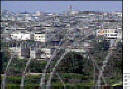
North Gaza Governorate:
Where is North Gaza Located?
North Governorate of Gaza Strip includes Jabalia, Beit Hanoun, Beit Lahia, and Al Nazleh village.
Jabalia:
Its name may be literalized of “Azalia” or the Roman “Zilia” or Syriac “Jabalia” which means the mountains, or Jabalia meaning Pottery and earthenware.
Jabalia is attributed to “Jabaliya” who might come to it at the end of the Bizante time. They were a mixture of Arwan, Egyptians and others who were sent by Yansenianos at the outset of the sixth century of Christ in order to protect the monastery which the priests of Tor Sinai had built.
Al Dabbagh, a Palestinian writer and historian said: “It is agreed that Jabaliya, living around the monastery now, are those guards who adopted the religion of Islam; It is well known that Sinjer Alameddin Al Jawily who was Gaza chief prosecutor in 711Hj , had possessed the lands of Jabaliya and endowed them to his mosque which he built in Gaza where the Mamelukes were asked to stay.
Jabalia lies on a flat land of the southern coast plain to the Northeast of Gaza City and it is (2km) far from it. It is connected with Gaza-Jaffa Main Street by a local paved way.
The city is (35) meters above sea level. Jabalia has become worldly known since the first sparkle flared up the first Palestinian people Intifada due to the bloody clashes between the unarmed citizens and the Israeli army which was fully armed with fatal weapons on the nineth of December 1987. Jabaliya camp is one of the most overpopulated camps. It locates in the north of Gaza.
Beit Lahia:
The word “Lahia” is Syriac, meaning, “desolate” of “tiresome”. Beit Lahia is 7 KMs northeast of Gaza. It was surrounded by dunes, which were (55m) above sea level. It looks like- from a distance- a nice looking forest surrounded with high trees and many huge Sycamore Trees. Apples are the famous fruits known for its good smell and taste, so it has become a saying. Moreover there are peaches, plums, apricots, grapes, almonds, strawberry trees and flowers. The Israeli occupied authorities possessed a considerable parts of its lands and constructed the settlements of “Nissanit”, “Eilly Sinai”, and “Dogeit”
Beit Hanoun:
Hanoun means, “compassionate”. It was believed that it was a name of a king or one of Gaza leaders who resisted Assyrians in the eighth century BC In 637 Hij there was a war between Europeans and Muslims in Beit Hanoun where the Europeans were defeated as it is recorded on a big slab tile fixed on the façade of the village mosque which was specially built to commemorate that battle and is called “Al Nassr Mosque”. At the Mamluke time, Beit Hanoun was a post station between Gaza and Damascus. It was named “Heenin” by the companion of “Soboh Ala’ashi”.
Beit Hanoun lies in the northeast of Gaza and it is (50m) above sea level. The most important crops are oranges, figs, grapes, apples, almonds, strawberry, and flowers. Beit Hanoun is the border area and the crossing between 1948 areas and Gaza Strip.
Al Nazlah village
This village lies in the northwest of Jabalia which forms with it one town. Al Nazlah is a modern village on the place where the Roman village of “Izalia” existed.
Jabalia refugee Camp
|